In this article, we explore why long-lasting reusable sensors like BISON WIM by IWIM are a future-proof weigh-in-motion technology for road authorities, public infrastructure managers, and executives looking for sustainable, cost-effective solutions. We highlight how fiber optic systems deliver superior performance, from resisting high asphalt temperatures to surviving road resurfacing and relocations. The goal is to demonstrate how fiber optic WIM technology provides long-term stability, reliable WIM system operation, and significant economic benefits for operators – all in a positive, forward-looking tone.
Fiber Optic Weigh-In-Motion Sensors: Long Lifetime and Reusable Technology with BISON WIM
Weigh-In-Motion (WIM) technology has revolutionized how we monitor heavy vehicles by allowing dynamic truck weighing without stopping traffic. Now, a new generation of fiber optic weigh-in-motion sensors is pushing this innovation further. These weighing sensors offer exceptional longevity and reusability, addressing many challenges faced by traditional WIM systems.
Why Reusable Weighing Sensors Matter for Road Authorities and Operators
For road authorities and operators, the lifetime of weigh-in-motion sensors is a critical concern. Highways and bridges are expensive assets, and managing them involves periodic maintenance like asphalt resurfacing, repairs, and upgrades. Traditional WIM sensors often need replacement during these works, leading to extra costs and traffic disruptions.
A reusable weigh-in-motion sensor changes this equation by allowing the same sensor to remain in place or be reinstalled after road work, saving both money and downtime. This is especially important for public authorities under tight budgets and logistics managers who demand maximum uptime from their dynamic weighing systems.
From Traditional Sensors to Fiber Optic WIM
Single-Use and Delicate Sensors
Traditional WIM systems have commonly used piezoelectric, quartz, or strain-gauge plate technologies. While functional, these sensors tend to have limited durability and often require replacement when road maintenance occurs. They are, in most cases, single-use solutions, which increases lifecycle costs.

The Next Step: Fiber Optic Weigh-In-Motion Sensors
Fiber optic weigh-in-motion sensors represent a major leap forward in addressing the shortcomings of earlier WIM technologies. In fiber optic WIM systems like BISON WIM, the sensing element is an optical fiber (or fiber Bragg grating) integrated into a robust carrier (such as a steel strip or plate). The fiber measures strain or pressure by changes in light signals, rather than relying on electrical output from crystals or strain gauges. This design brings several key advantages:
Which Weigh In Motion has a Longer Life span?
Fiber optic sensors are inherently resistant to fatigue. Glass fibers don’t wear out from millions of bending cycles the way metal strain gauges do.
In fact, fiber Bragg grating sensors are noted as promising for long-term monitoring in harsh environments, effectively replacing conventional strain gauges. Real-world evidence is now emerging: in one case, fiber-optic WIM sensors demonstrated exceptional durability and stable functioning over years of heavy use.
The BISON system’s innovative fiber optic technology has been confirmed by independent evaluators to provide durability and stability of functioning in the field. Manufacturers estimate these fiber optic WIM sensors can last decades; for instance, BISON’s stainless steel + fiber optic plates are engineered for an estimated lifespan of 30 years. far outliving most older sensor types. This longevity translates to lower total cost of ownership and fewer headaches for road operators.
How to reuse Bison Weigh In Motion system?
Reusable Design: Perhaps the biggest game-changer is that fiber optic WIM sensors like BISON are built with reusability in mind. The sensor plates can endure road work and be used again, rather than being disposable.
BISON weigh sensors are reusable; it is possible to re-asphalt the road without damaging the sensors. This means if a road needs a new overlay of asphalt, the construction crew can pave over the flush-mounted fiber optic sensors, then calibrate the system, and it will continue functioning – no need to rip out and replace the sensors for a simple resurfacing.
Moreover, if the road is completely reconstructed or if the WIM site needs to be moved, the fiber optic plates can be fully recovered and relocated to the new site. The plates are sealed and removable: they can be lifted out for maintenance or reinstallation without requiring a whole new sensor purchase. This reuse capability is unique to fiber optic WIM solutions like BISON and represents a fundamental shift from the “embed and replace” model of the past.
How BISON Fiber Optic WIM Sensors Work During Road Resurfacing


One of the most strong advantages of BISON’s fiber optic WIM sensors is how well they handle road maintenance events. Whether it’s a routine asphalt overlay or a full-depth reconstruction, these sensors are designed to either survive in place or be recovered intact, unlike traditional sensors which often must be junked. Let’s look at a few common scenarios:
Tolerating Hot Asphalt
Resurfacing a road involves laying a new layer of hot asphalt, typically at 150–180 °C (300–350 °F). Such high temperatures can damage delicate electronics or polymer-based sensors used in conventional weigh-in-motion (WIM) systems, which must often be removed to avoid heat damage.
Fiber optic WIM sensors, such as BISON, are designed to withstand these harsh conditions. Their sensing element—an optical fiber encased in steel—contains no plastic components or electronic circuits beneath the pavement. Both steel and optical fiber tolerate short-term exposure to hot mix asphalt and the heavy compaction forces during installation. Unlike some piezoelectric materials, BISON’s fiber optic plates do not soften or deform under heat, maintaining their functionality even through road resurfacing.
In practical terms, this means road crews can pave over BISON WIM sensors during maintenance, and the sensors will continue working normally once the asphalt cools. This saves a huge amount of effort – there’s no need to uninstall sensors or worry about reinstalling new ones just due to an overlay.
Remaining in Place During Surface Overlays


When a road is due for an asphalt overlay, most weigh-in-motion (WIM) systems require the removal or replacement of sensors. However, BISON fiber optic WIM sensors eliminate this need.
Installed flush with the pavement, BISON sensors can stay in place even when a new layer (e.g., 5 cm of asphalt) is added. After resurfacing, the sensors may sit slightly below the new surface, but they continue to function accurately through the overlay layer. If necessary, the top of the sensor plate can be exposed or adjusted to match the new surface level—without installing new hardware.
Because BISON’s sensing element is a steel-encased optical fiber, it easily withstands asphalt heat and compaction. After an overlay, only a calibration check and minor adjustment are needed, allowing the weigh-in-motion system to resume normal operation quickly.
For highway authorities, this is a major advantage: the WIM installation survives multiple resurfacing cycles (typically every 8–15 years), avoiding the costs, downtime, and replacement that traditional piezoelectric strip sensors require. Fiber optic WIM sensors like BISON make re-asphalting maintenance-free for embedded traffic monitoring systems.
Complete Recovery During Full Road Reconstruction
In the event of a full road reconstruction or WIM site relocation, BISON sensors demonstrate true reusability. The stainless steel fiber optic plates can be removed and recovered intact, as they are installed in grouted channels that can be broken without damaging the sensors. Unlike conventional WIM sensors that are destroyed during removal, BISON units can be disconnected from the roadside cabinet and reinstalled or reused in a new pavement section.
Reusing and Relocating Sensors with IWIM’s Procedure
IWIM has developed a practical relocation procedure for BISON. The fiber optic sensors can be removed, transported, and reinstalled at a new site with minimal effort. BISON’s fiber optic sensors can be moved from site A to site B with relative ease.
Cost Savings and Lifetime Benefits for Road Operators
Choosing fiber optic weigh-in-motion sensors like BISON provides clear economic advantages:
Extended lifetime: 15-20 years of service.
Reusability: sensors survive overlays and reconstructions.
Reduced downtime: minimal maintenance and fewer lane closures.
Reliable accuracy: stable calibration reduces errors and enforcement issues.
Lower lifecycle cost: fewer replacements and more efficient operations.
In summary, fiber optic WIM sensors offer a compelling value proposition: higher initial quality for drastically lower long-term cost. Road operators get peace of mind that their weighing sensor solution will serve reliably for the long haul, providing continuous data and enforcement capability without the constant reinvestment and reinstallation that older sensor types demanded.
Frequently Asked Questions (FAQ) on WIM Sensors
Q1: What is weigh-in-motion technology?
Weigh-in-Motion (WIM) technology measures the weight of vehicles in motion, without requiring them to stop on a scale. Using sensors embedded in the road, a WIM system records axle weights, gross vehicle weight, speed, and vehicle classification as vehicles pass at highway speeds. The real-time data supports traffic monitoring, weight-limit enforcement, toll-by-weight systems, and infrastructure planning. (Learn more on the IWIM Weigh-in-Motion technology page.)
Q2: How long do weigh-in-motion sensors last?
Lifespan varies: traditional sensors may last only a few years, while fiber optic sensors like BISON are designed for decades.
Q3: Can fiber optic WIM sensors be reused after installation?
Yes – one of the major advantages of fiber optic WIM sensors (such as BISON) is that they are reusable. After installation, they can tolerate road work like resurfacing without being removed, and even if they are removed (for road reconstruction or relocation), the sensors can be reinstalled and continue working. The fiber optic sensors are designed to be recovered intact and re-deployed, unlike many older WIM sensors which are destroyed when taken out. In practice, this means you can pave over them or move them to a new site, and they retain full functionality. This reusability saves cost and is a unique feature of fiber optic WIM technology. (Read more about the fiber optic sensor design on IWIM’s fiber optic WIM technology page.)
In summary, choosing BISON means investing in a future-ready WIM system that offers longevity, reliability, and adaptability far beyond what traditional WIM sensors can provide.

Intelligent structural monitoring: an integrated view between traffic loads and infrastructure response

Intelligent structural monitoring: an integrated view between traffic loads and infrastructure response
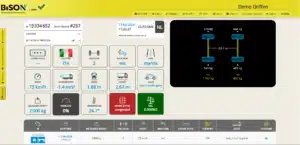
Integrated software for monitoring traffic and health of infrastructures with BISON and GRIFFON

Dynamic Weighing Basics: The Fundamentals of Weigh-in-Motion

The Dynamic Weighing System for Construction Sites – Low Speed WIM